Monday, December 5, 2016

Exercise Can Improve Depression, Treat Chronic Illness

We've been hearing for years that exercise is good not only for the body but the mind as well, and now there's more proof than ever.

Male and female bike riders
By U.S. Fish and Wildlife Service Headquarters (Pinckney Island bicycling). Uploaded by Dolovis) [CC BY 2.0 (http://creativecommons.org/licenses/by/2.0)], via Wikimedia Commons

Exercise Can Lessen Depression Symptoms...

A recent New York Times article notes that three studies have shown that exercise can not only improve symptoms in people with depression, but may actually keep people from becoming depressed to begin with. The studies combine research that altogether involves more than a million subjects.
The pooled results persuasively showed that exercise, especially if it is moderately strenuous, such as brisk walking or jogging, and supervised, so that people complete the entire program, has a “large and significant effect” against depression, the authors wrote.
What is it about exercise that improves one's mood? That's long been a matter of debate, but the article may finally provide some answers. A review in Neuroscience and Biobehavioral Reviews looks at studies that involved drawing blood from people with major depression before and after exercising, and as the Times article notes,
The samples on the whole indicated that exercise significantly reduced various markers of inflammation and increased levels of a number of different hormones and other biochemicals that are thought to contribute to brain health.
The researchers caution, however, that larger and longer-lasting studies need to be done to draw solid conclusions about the depression-fighting effects that exercise can have on the brain. 

...And Improve Chronic Illness

What about physical illness, especially the chronic variety? A recent Consumer Reports article (reprinted in the Washington Post) points to studies showing that exercise can offer disease-fighting benefits comparable to drugs or surgery, without the side effects. Citing a Canadian Medical Association Journal study, the article spells out how to get started with obtaining the disease-fighting benefits of exercise—safely—for several conditions including:
  • chronic obstructive pulmonary disease (COPD)
  • type 2 diabetes
  • osteoarthritis
What if you're currently too sick to exercise? The article addresses that, too, with tips on when it's OK or not OK to work out.

Running or Jogging Can Counteract Alcohol Damage to the Brain

It's well known that excessive drinking can cause damage to the brain (and yes, it apparently really can kill brain cells). But another recent New York Times article suggests that jogging or running, or other forms of aerobic exercise, can minimize the damage that alcohol does. It points to studies presented at a Society for Neuroscience meeting last month revealing that the brains of rats that were given alcohol and then were made to run showed markedly different effects than their brethren who didn't exercise.

Rats who didn't exercise had fewer neurons (nerve cells) in their brains, & their neurons showed damage to the mitochondria (the energy-producing parts of the cell). The rats who ran showed less neuron loss, and less mitochondrial damage.

As for how to fit in more exercise into your schedule of holiday parties, well, that's up to you.

Sunday, April 10, 2016

Women's Health: Birth-Control Pill May Cut ACL Injuries in Female Athletes

Erin McLeod kicking soccer ball
Canadian goalkeeper Erin McLeod, shown here in the 2011 World Cup, had to pull out of the 2016 Olympics with an ACL injury. Photo: Thewomensgame

It's long been known that women and girls suffer more injuries to the ACL (anterior cruciate ligament) than males. Estrogen has been thought to be one of the culprits, and a recent study offers more evidence to back up this theory.

Girls aged 15 to 19 who were on the birth-control pill, which reduces estrogen levels, were shown in the study to be less likely to experience severe knee injuries than girls not taking the medication. While the research, conducted at the University of Texas, showed an association between estrogen and ACL injuries rather than a cause-and-effect relationship, the findings are nevertheless intriguing.

Less Estrogen, Fewer Knee Injuries?

"The teens with ACL injuries who were on the birth control pill were less likely to need corrective surgery than girls not taking the pill who had ACL injuries," said an article on the U.S. government website MedlinePlus. "The girls with the highest rates of ACL surgery were 22 percent less likely to be taking birth control pills than those who didn't have an ACL injury."

MedlinePlus also notes "The teens with ACL injuries who were on the birth control pill were less likely to need corrective surgery than girls not taking the pill who had ACL injuries."

The theory of the Texas research is that increased estrogen somehow weakens the ligaments and makes them more susceptible to injury, say the authors of the study. Many athletic girls and women already take birth control pills to have a more regular period and lighter menstrual flow.

Girls and women have many more ACL injuries than male athletes—from twice to eight times as many, depending on what statistics you read. What's more, while the injuries in men occur most likely as the result of contact (as in football or basketball), females often suffer ACL tears in non-contact situations, such as when making a cut in soccer.

Erin McLeod, goalkeeper for the Canadian national team, recently announced she'd have to skip the Rio de Janiero Olympics this summer because of an ACL injury.

Women & ACL Injuries: Possible Culprits

There can be a number of causes to why women are more susceptible to ACL injuries, from the estrogen association the Texas research studied to women's wider hips, a narrower area through which the ACL passes, and greater knee extension. (A WebMD article has a good overview of some of the physical differences between men and women that can possibly explain the increased ACL injuries in women.)

One bit of good news is that doctors have gotten better at treating ACL injuries in women and helping the athletes get back on the field and court. McLeod, the Canadian soccer player, had two previous knee injuries before the current one, and was able to return to professional-level play.

Another hopeful sign is that there's been more focus on helping girls and women prevent ACL injuries, including strength training to build up leg muscles to reduce the strain on knee ligaments. A 2012 study in Sports Health found that two injury-prevention programs "significantly reduced ACL injury rates and improved athletic performance tests."

See the MedlinePlus article on estrogen and ACL injuries in girls, and read an abstract of the Texas study, which was published in the journal Medicine & Science in Sports & Medicine.

Wednesday, July 22, 2015

How to Improve Your Sleep Without Giving Up Your Evening Screen Time

In our last post we looked at how spending time on smartphones, tablets, and other screens at night can prevent you from falling asleep (or getting enough sleep). In this post, we'll review some of the ways you can tweak your screen time to get to sleep sooner and be better rested the next day. And, as you'll see, you don't necessarily need to give up your electronic reading time before bed.

As noted in our previous post, computer, phone, and tablet screens can interfere with our sleep patterns because they emit light in the blue wavelength, which our brains associate with daylight, and with wakefulness (certain e-reader screens don't have this problem). What if you could adjust the wavelength to make it more conducive to sleep?

Thursday, January 8, 2015

Is Your Late-Night Screen Time Keeping You From Sleeping?

Lots of people don't get enough sleep these days, and there's growing evidence that smartphones and other digital devices may be contributing to the problem.

Part of the trouble is what people are reading or viewing. Consuming content that gets us excited (whether it's a thriller novel or a troubling news story, in print or on a screen) can delay sleep by causing us to lay awake thinking about whatever it is we've read or seen.

alarm clock
Are your digital devices keeping you awake? (Photo: Evil saltine, Wikipedia.)

But now scientists have found another reason why it may not be a good idea to be on our laptops, smartphones, or tablets right before bedtime: the light the gadget gives off may be keeping us from dozing off, and from feeling well rested the next day. A recent Harvard study has found that people who read before bed using a tablet or other e-reader gadget "felt less sleepy and took longer to fall asleep than when they read a regular printed book, researchers found," according to WebMD.

What's more, these people had more trouble waking up and gaining full alertness than they did after reading an old-fashioned printed book, even though they slept the same amount.

Wednesday, May 7, 2014

Endometriosis: New Hope for a Common (But Not Commonly Discussed) Condition

You won't often hear about endometriosis on the nightly news, or even in the health section of newspapers and websites. But this gynecological condition—in which the type of tissue that lines a woman's uterus (the endometrium) grows in other, nearby parts of the body—is much more common than you'd think. And much more debilitating.

(Read about one woman's experience with the disease in "What I Wish Everyone Knew About Endometriosis."

As some recent news reports have pointed out, though, there may be new hope on the horizon for understanding endometriosis.

Blausen 0349 Endometriosis
Illustration of endometriosis. Source: BruceBlaus, Wikimedia Commons.

Endometriosis sufferers can face years or even decades of pelvic pain, inflammation, infertility, and a search for relief. The endometrial tissue can grow in areas like the ovaries, Fallopian tubes, outer surface of the uterus, and pelvic cavity lining. The tissue can form scarring that can cause adhesions between surfaces like the bladder and bowel.

With endometriosis, patients can experience a range of agonizing and potentially embarrassing problems, from pain during sex to extremely painful menstrual cramps, back pain, painful urination or bowel movements, and constipation or diarrhea.
 
To make the situation even more frustrating, researchers don't understand exactly what the causes of endometriosis are. And patients and even doctors may be reluctant to talk about it.

But as a recent New Yorker article notes, in recent years there's been news of an interesting collaboration that may shed important light on the origins of the disease (the article is well worth reading for its explanation of endometriosis and the issues involved in understanding its causes and treating it).

Tuesday, March 18, 2014

Health Notes: New Thinking on Fats & CVD; Alzheimer's Deaths Widely Underreported; Colon Cancer Rates Drop

 Above: Photomicrograph of the distal right coronary artery, showing complex atherosclerosis (thickening of the artery wall due to the accumulation of calcium and fatty deposits). Photo: Nephron, Wikimedia Commons.

We've been away for a long time, but now we're back to report on some new findings that shed a new light on some long-held medical beliefs.

* New study casts doubt on the link between saturated fats and heart disease. Saturated fats are a major contributor to heart disease, we've long been told. Not so fast, says a new study in the Annals of Internal Medicine. As explained in an article by the CBC, the researchers draws on more than 70 studies to conclude that "Current evidence does not clearly support guidelines that encourage high consumption of polyunsaturated fatty acids and low consumption of total saturated fats."

In addition, two studies have found that taking daily fish oil supplements may not help your heart health, either. The omega-3 fatty acids in fish oil supplements "showed consistently little or no significant effect on reducing coronary heart disease events," said the lead author of one of the studies.

* Alzheimer's deaths may be five times more than reported. Cases of Alzheimer disease are projected to grow dramatically in the coming years, but the disease may already be causing many more deaths than are reflected in the official stats. Researchers at Chicago's Rush University Medical Center say that hhis is because death certificates often neglect to mention Alzheimer as a contributing cause of death. The new numbers would make Alzheimer disease the third leading cause of death in the U.S.

What's more, a new report from the Alzheimer's Association says that women over 60 "have a 1 in 6 chance of getting Alzheimer's disease in their lifetime, and are twice as likely to develop Alzheimer's compared with breast cancer.

* Colon cancer rates decline sharply. The incidence of colorectal cancer, one of the most deadly forms of the disease, is down more than 30% among Americans due to increased use of colonoscopy for screening. "Xolonoscopy rates among adults ages 50 to 75 rose steeply — from 19 percent in 2000 to 55 percent in 2010," says an article in Health.com drawing on a study from the American Cancer Society.

The decrease was highest among older people: those 50 and older saw a decrease in colon cancer of 3.9% per year. There was bad news for younger people, however, as there's been a 1.1% per increase in colon cancer in persons under 50.


Saturday, March 2, 2013

Health Notes: Genetic Links Seen Between Depression, Autism, & other Disorders; Mind-Reading Rats; Public's Help Sought in Curing Cancer; More

Some interesting news from the world of health and medicine:

* Scientists see link in depression and four other disorders: Five disparate mental-health disorders may have a common genetic link, according to a new study that's getting lots of attention. The research has found that a number of genes are shared by people who have major depression, bipolar disorder, schizophrenia, autism, and attention-deficit hyperactivity disorder. The study was published in the edition of The Lancet publishing on Wednesday (abstract).

The researchers found that "four spots in the genome that were more common among those with psychiatric disease, two of which occurred in genes involved in communication between brain cells," according to an article in the Boston Globe. Also, "They also found that genetic risk factors for bipolar disorder and schizophrenia had the most overlap."
They also found that genetic risk factors for bipolar disorder and schizophrenia had the most overlap. - See more at: http://www.boston.com/news/science/blogs/science-in-mind/2013/02/27/autism-schizophrenia-and-other-psychiatric-disorders-share-genetic-underpinnings/I5Rdy7NikMlFvTe8d9BXoL/blog.html#sthash.iwHOygA5.dpuf
four spots in the genome that were more common among those with psychiatric disease, two of which occurred in genes involved in communication between brain cells. - See more at: http://www.boston.com/news/science/blogs/science-in-mind/2013/02/27/autism-schizophrenia-and-other-psychiatric-disorders-share-genetic-underpinnings/I5Rdy7NikMlFvTe8d9BXoL/blog.html#sthash.iwHOygA5.dpuf
found four spots in the genome that were more common among those with psychiatric disease, two of which occurred in genes involved in communication between brain cells.
They also found that genetic risk factors for bipolar disorder and schizophrenia had the most overlap.
- See more at: http://www.boston.com/news/science/blogs/science-in-mind/2013/02/27/autism-schizophrenia-and-other-psychiatric-disorders-share-genetic-underpinnings/I5Rdy7NikMlFvTe8d9BXoL/blog.html#sthash.iwHOygA5.dpuf
found four spots in the genome that were more common among those with psychiatric disease, two of which occurred in genes involved in communication between brain cells.
They also found that genetic risk factors for bipolar disorder and schizophrenia had the most overlap.
- See more at: http://www.boston.com/news/science/blogs/science-in-mind/2013/02/27/autism-schizophrenia-and-other-psychiatric-disorders-share-genetic-underpinnings/I5Rdy7NikMlFvTe8d9BXoL/blog.html#sthash.iwHOygA5.dpuf
found four spots in the genome that were more common among those with psychiatric disease, two of which occurred in genes involved in communication between brain cells.
They also found that genetic risk factors for bipolar disorder and schizophrenia had the most overlap.
- See more at: http://www.boston.com/news/science/blogs/science-in-mind/2013/02/27/autism-schizophrenia-and-other-psychiatric-disorders-share-genetic-underpinnings/I5Rdy7NikMlFvTe8d9BXoL/blog.html#sthash.iwHOygA5.dpuf


Telepathic rats? See for yourself.

* "First mind-reading implant gives rats telepathic power": Now there's a headline that'll get your attention. The New Scientist articles reports that "The world's first brain-to-brain connection has given rats the power to communicate by thought alone."

Although this is an exciting development in brain research (rats on different continents were even able to communicate via the Internet), the article notes that  "the exact information being communicated between the rats' brains is not clear."

* Tech giants seek public's help for cancer cure: British cancer researchers are joining forces with Google, Amazon.com, and Facebook to enlist the public's assistance in finding cures for cancer. Cancer Research U.K. is teaming up with the tech firms to get the public to perform tasks that can help in efforts such as "working out the exact sequence of a tumor's DNA,"according to a BBC News article.

Programmers, game designers, and others are set to meet this week to figure out how to create a game-life way to put the collective eyeballs and computer power of everyday citizens to solve problems in cancer research. The concept is similar to volunteer-computer efforts from the BOINC project, such as SETI@Home and medical-related endeavors such as RNA World and Malariacontrol.net. It's hoped the project will be up and running by summer.

* Coronary calcium indicates stroke risk: A coronary artery calcification score can predict the risk of stroke, independent of other factors, at least in cases of people with lower risk of cardiovascular disease. An article in MedPage Today says that this may or may not change how clinicians work, since it's already been established that stroke and coronary artery disease have some of the same disease processes.

What's more, the measure of calcification is done by an electron-beam CT scan, so any potential benefit of the rest must be weighed against the additional radiation exposure.

Friday, February 1, 2013

FDA Panel Seeks New Limits on Powerful Painkiller Hydrocodone

An advisory panel of the Food and Drug Administration (FDA) has recommended that the agency put tighter restrictions on the common painkiller hydrocodone, an ingredient in brand-name drugs such as Vicodin. The vote of the panel was 19-10: a majority to be sure, but certainly not unanimous.

Hydrocodone/paracetamol tablets
Hydrocodone/paracetamol 5/500 tablets (Mallinckrodt). Photo: Elbreapoly

The panel is calling for hydrocodone, an opioid, to be made a Schedule II drug, which will place it in the same category as morphine, fentanyl, and oxycodone. Hydrocodone is currently in Schedule III.The FDA is likely to follow the panel's advice, according to the New York Times. The agency is seeking to limit widespread abuse of painkillers; the Times article notes that the number of deaths from pain drugs has increased fourfold since 1999.

Among other things, being in the more restrictive Schedule II would mean that hydrocodone prescriptions would be harder to refill (a patient would need to get a new prescription to get a refill). The drug could also not be obtained by faxed prescriptions.

Hydrocodone is the most frequently prescribed pain medication in the U.S., and some experts say it is because of the misconception in the medical community that it is not as dangerous or addictive as Schedule II drugs such as Percocet or methadone.

Other professionals question whether putting hydrocodone in Schedule II would actually limit its abuse, and may make it harder to obtain for patients suffering from pain.

The FDA panel is hoping to make the nation's most-prescribed painkiller less of a killer.

Saturday, January 12, 2013

2013 Flu Outbreak: Know the Signs & Protect Yourself

The 2012-2013 flu season is shaping up to be a very bad one, with widespread flu "activity" reported in 47 states, according to the CDC. New York became the latest state to declare a public health emergency due to the epidemic, but some areas may begin to see fewer cases.

Below the Google flu map are some ways to protect yourself from getting the flu and, failing that, keep it from getting worse if you do get it.

Google flu map
Google's flu map shows data from around the world.


* First off, get a flu shot. You can find out where in your area to get one by using the HealthMap flu-shot finder at the American Lung Association website. Just enter your zip code and find a location that's near you. (And no, even though it's January, it's definitely not too late to get your shot for this season.) See this CDC Q&A on the flu shot.

* See the CDC's flu prevention page for tips on how to avoid getting the flu. You'll recognize most of the commonsense guidelines, which include:
  • wash your hands often with soap and water or a an alcohol-based hand sanitizer; 
  • try not to touch your eyes, nose, or mouth (these are the prime entry points for germs); 
  • and try not to get too close to people who are already sick
Door handles, bathroom fixtures, ATM keypads, and the like harbor abundant number of germs; try touching them only with a paper towel. Also: Computer keyboards are also home to a mind-boggling array of germs. If you have to access a shared keyboard, wipe it down with one of those alcohol-based sheets.

* What if you've gotten the flu already? You probably know the drill: get lots of sleep, drink plenty of fluids, take medication to reduce the fever if you have it, etc. See the Red Cross's information sheet (PDF) for more tips on what to do if you get the flu.

Google is once again doing its Google flu map (see above), which it has done for several years now, so you can see the relative amount of flu activity across the U.S. and around the world.

For some good information (with a humorous touch) on avoiding the flu, see this article from Digital First Media. It includes advice such as getting more sex (it may boost your immune system), avoiding the flu by pretending you're a detective; and even a link to 50 ways to spend your sick day.

Get your flu shot, and stay healthy out there.

Tuesday, October 9, 2012

Fungal Meningitis Outbreak Spreads; 11 Now Dead

More victims are turning up in the growing outbreak of fungal meningitis linked to drugs from a company in Massachusetts. More than 13,000 people have gotten fungus-contaminated injections of a steroid that they were given to relieve pain (most in the back), and 119 have come down with the fungal infection in their cerebrospinal fluid. The list of infected individuals spans 11 states.

CDC fungal meningitis fact sheet
The CDC has a patient FAQ for the fungal meningitis outbreak.

To date, 11 of the victims have died. But the number of people infected as well as the number of deaths can be expected to grow, since it can take up to a month for fungal meningitis symptoms to present, and delays can take place in reporting the illness.

The drug involved is preservative-free methylprednisolone acetate, and injections of the potentially contaminated lot were given starting May 21st, 2012. All of the cases result from a product manufactured by a compounding pharmacy, New England Compounding Center in Massachusetts, which has recalled the tainted product as well as the other drugs it produces. (See the complete list of NECC products being recalled [PDF file].)

The CDC has reported that the type of meningitis involved is not contagious. See the CDC's patient information page for the fungal meningitis outbreak for questions and answers about the disease and this outbreak, including the symptoms.

The CDC says that patients should talk to their doctor as soon as possible if they've had an epidural steroid injection since May 21, 2012 and have any of the following symptoms:
  • New or worsening headache
  • Fever
  • Sensitivity to light
  • Stiff neck
  • New weakness or numbness in any part of your body
  • Slurred speech
  • Increased pain, redness or swelling at your injection site
A WebMD article posted today has more details on the outbreak and on fungal meningitis symptoms.

A report on CNN tonight (Oct. 9th) said that unlike traditional drugmakers, compounding pharmacies aren't regulated by the federal government. What do these pharmacies do? "Compound pharmacists create customized medication solutions for patients for whom manufactured pharmaceuticals won't work, according to the International Academy of Compounding Pharmacists," said the print version of the CNN report.

[UPDATE, Oct.10th: As another person died from fungal meningitis, calls have grown for FDA oversight of compounded drugs, says a story from ABC News.]

Tuesday, September 25, 2012

Worst West Nile Outbreak in U.S. History is Waning

This year's outbreak of cases of the West Nile virus (WNV) was the worst in U.S. history, but the CDC says it may be waning, according to an article on WebMD. Cases in the second week in September were up 35% from the week before. But instances of the disease, which is spread by mosquitoes, are expected to decline as the weather cools in much of the nation and the insects die off.

West Nile virus activity by state as of Sept. 18th, via CDC.

WNV is spread by mosquitoes that feed on birds that are infected with the virus. Mosquitoes can not spread WNV from one person to another.

Cases of WNV have been seen in 48 of the 50 states, and through Sept. 18th 3,142 cases of human West Nile virus disease have been reported to the CDC, with 134 deaths.

The good news is that about 80% of the people who are infected with WNV won't show any symptoms at all. The 20% that do exhibit symptoms will suffer from maladies such as:
  • fever
  • head and body aches
  • nausea and vomiting 
People may also experience swollen lymph glands or a rash on the body.

Only one in 150 people who become infected with WNV experience severe symptoms. Of the U.S. WNV cases reported, 52% "were classified as neuroinvasive disease (such as meningitis or encephalitis)," while 48% involved non-neuroinvasive disease. The severe symptoms may include "high fever, headache, neck stiffness, stupor, disorientation, coma, tremors, convulsions, muscle weakness, vision loss, numbness and paralysis."

Encephalitis is swelling of the brain; meningitis is swelling of the tissues that cover the brain and spinal cord.

While few people will develop the severe forms of WNV, the symptoms above shouldn't be taken lightly. As the CDC notes, these symptoms "may last for several weeks, and neurological effects may be permanent."

For more information on West Nile virus:
- - - - - - - - - -
Editor's Note: With this post, Healthy Insite returns to publishing on what we hope to be a regular schedule. Look for more articles in the coming weeks.

Wednesday, August 31, 2011

Alzheimer's Disease - New Findings Hold Promise

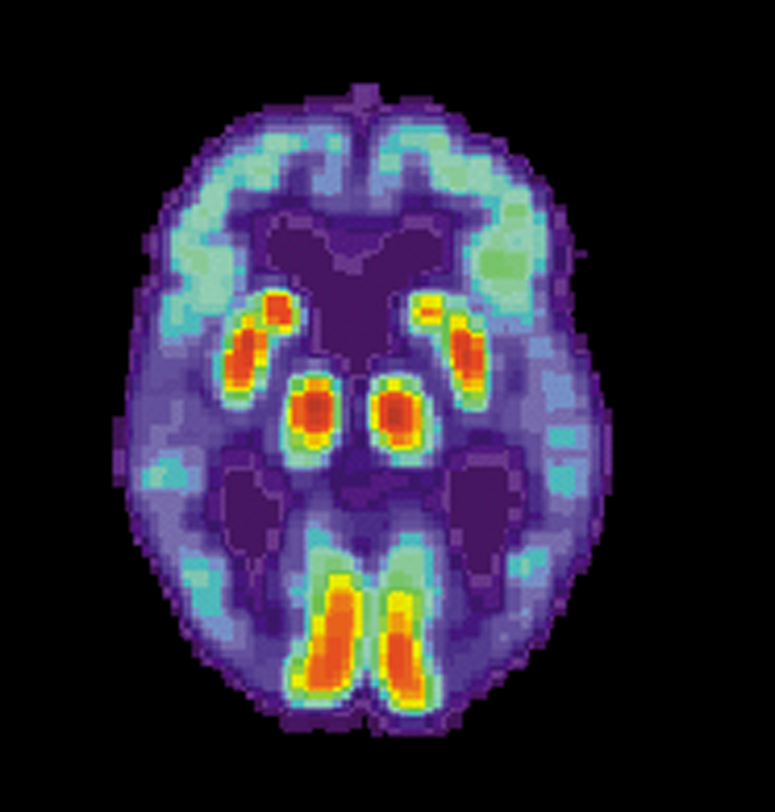
PET scan of a human brain with Alzheimer's disease. By US National Institute on Aging, Alzheimer's Disease Education and Referral Center, via Wikimedia Commons.

As the world's elderly population grows, the incidence of Alzheimer's disease is expected to skyrocket. The recent admission by 59-year-old University of Tennessee women's basketball coach Pat Summitt that she has early onset dementia has no doubt got many people in her age group worried.

Fortunately, there have been some new findings that are pointing to possible causes of and detection strategies for the disease. Things are very preliminary at this point, so scientists are cautioning people not to get their hopes up yet, but some of the research looks promising.

* Researchers in San Francisco have identified and ranked seven risk factors that can be linked to at least half of all cases of Alzheimer's disease. Worldwide, lack of education is the main cause; in the U.S., leading a sedentary lifestyle leads the way. See this L.A. Times story for more details.

In the U.S., the study says, lack of exercise was the main risk factor, accounting for 21% of risk. Depression was the next highest factor (15%), followed by smoking (11%), hypertension (8%), obesity (7%), low education (7%),  and diabetes (3%).

* It may be possible to detect some signs of Alzheimer's disease as long as 20 years before the onset of symptoms by examining a person's cerebrospinal fluid (CSF), say new findings from the Washington University College of Medicine in St. Louis. The research concerns a specific type of the disease called dominantly inherited Alzheimer's, which passes from one generation to the next.

This form of Alzheimer's is rare (only about 1% of all cases of the disease), but researchers hope that some of the information they gain from these findings will be applicable to the broader population of patients. 

* Can a simple smell test detect Alzheimer's? A team of Australian researchers is working on a test based on the fact that "people who have memory loss and other signs of mental decline that can lead to Alzheimer's may have trouble discriminating between smells."

In the test, a person is asked to sniff three sticks, two of which contain the same odor. If the person identifies the wrong stick, the test is repeated with sticks featuring a higher concentration of the odor.  The test showed that people in the study who had trouble telling the smells apart at the start of the study "were more likely to shows signs of mental decline."

* In addition, simple eye tests may be able to detect the presence of Alzheimer's disease before symptoms develop. One looks for changes in the retina, another looks for the presence of amyloid-beta, a protein found in Alzheimer's plaque, in the lens of the eye.

These are all early findings, but they may represent advances that may lead to simple and affordable detection methods.

Tuesday, March 29, 2011

Geraldine Ferraro Dies of Multiple Myeloma - What is This Blood Cancer?

CT scan of the head of a man with multiple myeloma. There is a lesion in the left temporal bone (red arrows) consistent with multiple myeloma. Green arrows show a normal facial nerve canal. Photo: radpod.org

Geraldine Ferraro, the first woman to be U.S. vice presidential candidate for a major party, died March 27th of complications from multiple myeloma, a type of incurable blood cancer. If you haven't heard of multiple myeloma, you're not alone: many news reports have simply said that Ferraro died of blood cancer without specifying the specific disorder. If she had died of leukemia, the most common cancer of the blood, they certainly would have mentioned it because that's a disease most people are familiar with.

Although multiple myeloma is not as well known as leukemia, it starts in the same place: plasma cells, which become white blood cells. In multiple myeloma abnormal plasma cells form and multiply, accumulating in the bone marrow and crowding out normal cells. The myeloma may collect in the marrow of a number of different bones, which is what the "multiple" part of the disease's name means. In addition, myeloma cells may collect in organs of the body.

Geraldine Ferraro, who was 75, died at Massachusetts General Hospital in Boston, where she was receiving treatment. She was Walter Mondale's vice presidential nominee in 1984, and had suffered from multiple myeloma for 12 years. She was involved in campaigning for greater funding and new treatments for the disease, and was an honorary board member of the Multiple Myeloma Research Foundation (MMRF). Before being named VP candidate, Ferraro had been a member of the U.S. Congress from New York City and had served as a criminal prosecutor in Queens.

Find out more about multiple myeloma at the Medicine.net article here or at MayoClinic.org (both written for the lay reader).

Saturday, March 5, 2011

H.S. Basketball Player Wes Leonard is Latest Young Athlete to Die of Cardiomyopathy

Idiopathic cardiomyopathy, gross pathology 20G0018 lores
Above: Gross pathology of the heart showing idiopathic cardiomyopathy, which is similar to dilated cardiomyopathy. The opened left ventricle of heart shows a thickened, dilated left ventricle with subendocardial fibrosis manifested as increased whiteness of endocardium.

Sixteen-year-old basketball player Wes Leonard died of cardiac arrest caused by dilated cardiomyopathy (an enlarged heart), according to a Michigan medical examiner. Leonard collapsed during the post-game celebration for his Fennville High School team the other after scoring the winning basket near the end of the overtime game.

Cardiomyopathy is a condition in which the heart muscle becomes enlarged or thickened and weakened, making it unable to pump blood effectively. The heart, like any other muscle, increases in mass when it is exercised, and it is not unusual for athletes such as basketball players and distance runners to have enlarged hearts, or even cardiomyopathy. But to some people, cardiomyopathy can be harmful or even deadly.

Dilated cardiomyopathy is the most common form of cardiomyopathy according to the U.S. National Institutes of Health. It can be caused by a genetic disorder or by a variety of other problems including heart rhythm disturbances, infection, drug or alcohol abuse, medications, or even high blood pressure.

Unfortunately, Wes Leonard is only the latest high-profile athlete to die because of cardiomyopathy, which often causes no symptoms. In many cases, the person doesn't know anything is wrong until he or she collapses during or after a practice or game. The lucky ones survive the first incident and get treatment to prevent reoccurrence.

American distance runner Ryan Shay died suddenly in 2007 while running the U.S. Olympic half marathon trials in New York City. His father said that Shay had an enlarged heart that was first diagnosed when the runner was 14. Shay's death was attributed to "cardiac arrhythmia due to cardiac hypertrophy with patchy fibrosis." Hypertrophy is a thickening of the heart muscle.

After Shay's death, a number of medical experts said that an enlarged heart was "the biggest cause of sudden death among young athletes."

Athletes and former athletes who have died of hypertrophic cardiomyopathy include Reggie Lewis of the Boston Celtics, Loyola Marymount University basketball player Hank Gathers, and Maggie Dixon, coach of the Army women's basketball team, who was a former college player. All were under the age of 30 when they died.

After Dixon's death, the Maggie Dixon Foundation was set up to raise awareness of and screening for heart arrhythmia and sudden cardiac death in young people. Each December the Maggie Dixon Classic features four of the nation's top women's college basketball team playing a doubleheader in New York's Madison Square Garden to promote the cause and screen attendees for heart problems.

It's hoped that the death of Wes Leonard will bring more attention to cardiomyopathy and other heart conditions in young people, and make athletes, coaches, and parents more aware of the problem.

Thursday, September 30, 2010

Fisher-Price Recall Affects Over 10 Million Trikes, Other Products

More than 10 millions toys and other children's products from Fisher-Price have been recalled in an announcement made Sept. 30th. Two of the products, the Fisher-Price Trike and Tough Trike, have caused injuries, according to the U.S. Consumer Products Safety Commission. The tricycles account for seven million of the items in the Fisher-Price recall.

You can find full list of Fisher-Price recall items at the recall section of the website of Mattel Inc., which makes Fisher-Price products. This list includes product numbers and instructions on how to find out if a product you have it affected by the recall.

The recalls issued today involve products sold in the U.S. and Canada. The products announced in the Fisher-Price recall (with links to the appropriate pages at the Mattel service website) include tricycles, rampway toy cars, and inflatable balls.

For more information, see the Consumer Product Safety Commission page on the Fisher-Price recall.

Sunday, August 29, 2010

Cargill Ground Beef Recall - Products Sold at BJ's Warehouse Stores

A recall has been issued for Cargill ground beef products sold at BJ's Wholesale Club in eight eastern U.S. states.

Three people in New York and Maine have been sickened since early August from tainted ground beef products from Cargill. All of the products were distributed to BJ's Wholesale Club stores. The eight states that have received recalled product are: New York, Maine, Connecticut, Virginia, New Jersey, New Hampshire, Massachusetts, and Maryland.

See this article on the Cargill ground beef recall for details on the specific BJ's stores that received the tainted ground beef products involved in the recall.

Friday, August 27, 2010

Tommy John Surgery: What It Is, How It Works

With the news that rookie baseball pitcher Stephen Strasburg may have to have Tommy John surgery to repair a damaged arm, this article gives a good, illustrated look at what this procedure is.

Medically known as ulnar collateral ligament reconstruction surgery (UCLR), the procedure was a major advance in sports medicine in the 1970s, and got its nickname because Los Angeles Dodgers pitcher Tommy John was the first baseball player to undergo the new procedure, pioneered by Dr. Frank Jobe. (The operation was a success, and John was able to resume his career.)

Tommy John surgery has a success rate of around 85%, and is considered to be one of the most important advances in sports medicine in the last quarter-century, if not the most important. After undergoing the operation, the patient must undergo rehab for a year, and a pitcher may have to work another year pitching to get back to the form he had before the surgery. But that's much better than the alternative.

Tommy John surgery involves reconstruction of the ulnar collateral ligament (UCL), also called the medial collateral ligament, one of the ligaments connecting the upper arm bone (humerus) to the main forearm bone (ulna). The UCL can be damaged by repetitive stress, such as the throwing motion baseball players use.

In Tommy John surgery (which has been improved greatly since the 1970s), the damaged ligament is replaced with one harvested from another part of the patient's own body, such as the leg or forearm.
Read about Tommy John surgery at this article at E-Orthopod.com: what it is, how and why it's performed, what a patient can expect from it, and the complications that can occur.

Monday, July 26, 2010

Prader-Willi Syndrome - Causes, Symptoms, Treatment, & More

Prader-Willi syndrome is a rare genetic disorder that can develop in infancy and eventually affect many body parts and systems by childhood. Infants with Prader-Willi syndrome may have poor muscle tone and difficulties in feeding. In childhood, individuals with the disorder will have have an overactive appetite and experience problems with chronic overeating, leading to quick weight gain and obesity.

Other symptoms of Prader-Willi syndrome can include learning disabilities, underdeveloped genitals (in both male and female patients), and short stature. It is estimated that Prader-Willi syndrome affects one in every 15,000 children.

See the article at MedicineNet.com for more information on Prader-Willi syndrome causes, symptoms, signs, diagnosis, and treatment.

You can also find more details and Prader-Willi syndrome support at the website of the Prader-Willi Association (USA).

Monday, April 12, 2010

Neurofibromatosis: A Genetic Disorder of the Nervous System

Neurofibromatosis is a genetic disease that mostly affects the development of nerve cells. Also called NF for short, neurofibromatosis has two forms, NF1 (more common) and NF 2 (less common). As a story from a Dallas TV station notes, neurofibromatosis is more common than you might think, affecting one in 3,000 people.

The U.S. government's National Institute of Neurological Disorders and Stroke (NINDS) has a neurofibromatosis information page that explains the disease in plain English. According to this page, "These disorders cause tumors to grow on nerves and produce other abnormalities such as skin changes and bone deformities." NINDS also has a handy neurofibromatosis fact sheet. Symptoms of NF1 are often noticeable at birth or in infancy, usually in the appearance of the skin.

You can find information and support for neurofibromatosis at the  Web site of the Neurofibromatosis, Inc. NINDS also has an article on the proceedings of a workshop on neurofibromatosis in children, addressing basic and clinical research, animal models, treatment, and more.

Wednesday, March 24, 2010

Rebecca Skloot and HeLa Book Head Straight to Top of the Charts

Who would have thought that a book about aggressive cancer cells and the woman they came from would hit the top of the bestseller charts? When I wrote about Rebecca Skloot's "The Immortal Life of Henrietta Lacks" the day before it came out, I noted the great pre-pub press it had gotten, but I had no idea that in its first week it would be as high as number 2 on the Amazon.com sales chart, or that it would reach a similar position on the New York Times bestseller list.

Of course, "The Immortal Life of Henrietta Lacks" has a lot going for it. It's an engaging, well-written book that is both an intriguing medical drama and a fascinating personal story of Ms. Lacks and her descendants.

What's more, Ms. Skoot is not only an experienced and knowledgeable science writer but an enthusiastic spokeswoman who loves talking HeLa and is adept as using social media to promote her book.

She's also open to using regular media that one might not think of for promoting a general interest science book. Yes, she's made appearances on CBS Sunday Morning and ABC World News, but she also was a guest on Comedy Central's The Colbert Report (I was fortunate enough to be in the audience for that taping).

For anyone interested in learning about HeLa and the Henrietta Lacks story, I recommend reading the book of course, but also trying to see Rebecca Skloot on her extensive book tour, which she's calling The Immortal Book Tour.